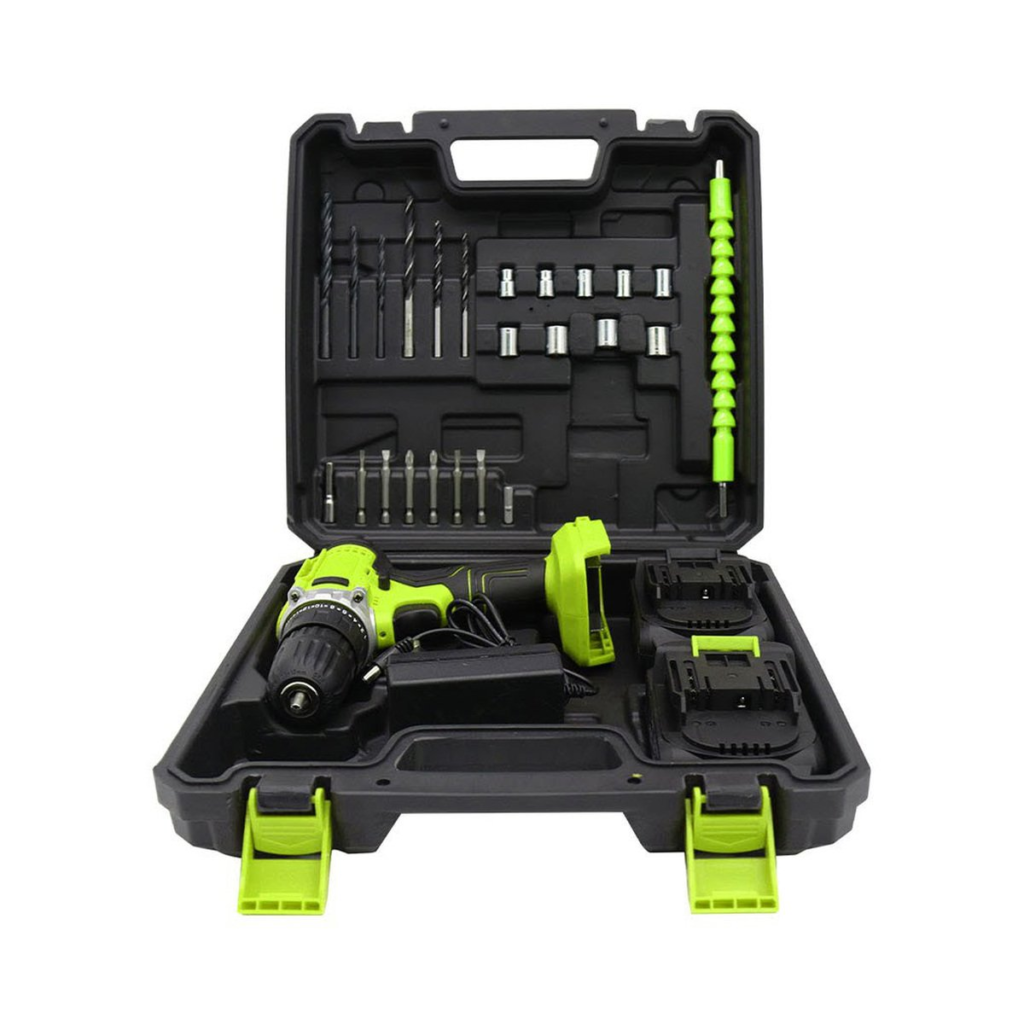
A bare tool and a battery kit can contain the same power tool but represent different buying decisions. A bare tool usually excludes the battery and charger. A kit bundles the tool with specified components, which may include one or more batteries, a charger, accessories and a case. Always compare the written contents: the word “kit” does not define a standard package.
For importers and distributors, the useful question is which configuration fits the customer, the existing battery range and the intended retail offer. This guide explains what to compare before requesting a cordless power tool quotation.
Bare tool vs battery kit at a glance
| Buying question | Bare tool | Battery kit |
|---|---|---|
| What is normally included? | The tool body; check the accessory list. | The tool plus the batteries, charger and other items specified in the offer. |
| Who may prefer it? | Customers who already own a confirmed compatible battery and charger. | Customers starting with a battery system, or buyers who want a defined package. |
| What needs checking? | Compatibility with the customer’s exact battery and charger models. | Battery quantity and capacity, charger specification, plug, accessories and packaging. |
| How should prices be compared? | Add the components needed to make the offer usable for the intended customer. | Compare equivalent component lists and commercial terms. |
1. Start with the customer’s existing equipment
A bare-tool offer can make sense when your customers already use a compatible battery system and want an additional tool. Before building a range around that assumption, ask which battery and charger models they own. A matching voltage label or similar connector is not sufficient evidence of compatibility.
For a new retail range, a battery kit gives you a clearer starting specification. Decide what a customer should receive in one box, then ask the supplier to confirm the complete configuration. ZM Tools’ buyer FAQ explains that available bare-tool and kit options depend on the selected model.
2. Compare the complete offer
Put competing quotations into the same comparison sheet. Record the tool model, battery model, battery quantity, stated capacity, charger, plug, accessories, case and retail packaging. Leave missing values marked “to be confirmed” rather than assuming the lowest-priced quote includes them.
For example, a tool-only quotation and a two-battery kit quotation should remain separate configurations until you know the price and availability of the missing components. Even two offers described as “one-battery kits” may include different chargers, cases or accessories.
Keep the quantity, currency and delivery terms visible alongside the configuration. A product price alone does not describe the full purchasing cost. Ask for the information required to compare freight, packing and other applicable charges separately.
3. Specify the battery and charger as a system
Ask for written confirmation of the exact tool, battery and charger combination. Record model numbers on the quotation and on your sample-review sheet. If the battery or charger changes after sample review, ask whether the revised combination needs another check.
Review the charger input rating and destination plug with the supplier. Keep the relevant instructions and any requested market documents attached to the agreed configuration. Do not extend the approval of one tool-and-battery combination to the entire catalogue without confirmation.
Use the batteries, chargers and tool sets category as a starting point for your enquiry. Product listings help identify candidates; compatibility and available kit contents still need model-specific confirmation.
4. Decide how the offer will appear in your sales channel
For an online listing, state prominently whether the battery and charger are included. Use a photograph and an item list that match the version being sold. If you stock both bare-tool and kit versions, give each a clear internal SKU and keep their descriptions distinct.
For a dealer or retail programme, check whether the case, manual, accessory arrangement and box information suit the intended offer. A photograph of several accessories should not be treated as confirmation that every pictured item is included.
5. Review the sample against the quotation
When a sample arrives, compare its model labels and contents with the configuration sheet. Record any differences before approving the order. Follow the manufacturer’s instructions when evaluating the product, and agree separately on any specialist testing needed for your project.
Our power tool sample approval checklist provides a structure for recording the tool, components, artwork and packaging together.
A quotation brief you can copy
- Destination country and sales channel
- Tool model and intended application
- Quantity for the bare-tool option and the kit option
- Required battery model, capacity and quantity
- Charger specification and plug requirement
- Accessories, case and packaging
- Logo, colour or label requirements
- Requested documents and preferred timing
Frequently asked questions
Is a bare tool always the cheaper choice?
Compare the complete offer your customer needs. A lower tool-only price may require additional spending on a compatible battery, charger and accessories.
Does a battery kit always include two batteries?
No. Use the supplier’s item list to confirm the battery quantity, capacity and charger. Kit names are not a substitute for a specification.
Can I use a battery from another tool?
Only when compatibility has been confirmed for the exact tool, battery and charger. Follow the approved system’s instructions.
Compare configurations for your next order
Send ZM Tools your models, destination and estimated quantity, and specify which bare-tool and battery-kit options you want quoted. Availability, MOQ, sample cost and timing are confirmed for the selected configuration.